

Starting a Business/Business Foundation Resources

Starting a Business &
Business Foundation Resources
Navigating the business life cycle in Jefferson County, WI requires matching your company’s
stage with the localized public-private resources designed to support it.
There are four phases to each business journey. Each phase has essential resources specific to Jefferson County. Determine which phase you are in and start with those resources.

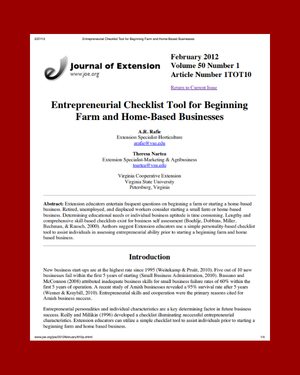
This Entrepreneurial Characteristics Checklist will assist in assessing your abilities prior to launching a business. Download by clicking the button below.

Follow the phases below to start your new business in Jefferson County. Want guidance? Contact us and we can help you come up with a plan.


Launch & Feasibility (Startup Phase)
Action Plan for Startups
1. Establish Your Legal Entity: 1-3 days.
Register your business structure (like an LLC or Corporation) through the Wisconsin Department of Financial Institutions (DFI) online portal. If you operate as a Sole Proprietorship using something other than your legal name, you must file a Fictitious Name form with the Jefferson County Register of Deeds.
2. Secure Tax IDs & Licensing: 1-2 weeks.
Apply for an Employer Identification Number (EIN) for free directly via the IRS website. Next, register for a Wisconsin Business Tax Registration (BTR) through the state Department of Revenue if you plan to hire employees or collect sales tax.
3. Activate Free Regional Consulting: Ongoing.
Before investing capital, vet your business model with the Wisconsin SBDC at UW-Whitewater (located at Hyland Hall, Whitewater, WI). They offer no-cost, confidential 1-on-1 coaching to help you build a solid pro forma and marketing plan.
4. Check Local Zoning & Ordinances: Before signing a lease.
Connect with the clerk or zoning administrator in the specific Jefferson County municipality you want to open in (e.g., Fort Atkinson, Watertown, Jefferson, or Lake Mills). Ensure your intended business use complies with local district zoning maps and find out if you need a Conditional Use Permit (CUP).
If you are forming an LLC, writing a business plan, or seeking initial market validation, look to regional academic and consulting partnerships.
- Wisconsin SBDC at UW-Whitewater: The Small Business Development Center offers no-cost, confidential consulting for business plan creation, financial projections, and go-to-market strategies tailored specifically to the Jefferson County and South-Central Wisconsin ecosystems. https://wisconsinsbdc.org/centers/whitewater/classes/
- Economic Support: Reach out to ThriveED at their Jefferson office (864 Collins Rd) or email President Deb Reinbold at
deb@thriveed.orgto discuss if your business concept aligns with any upcoming regional development initiatives or municipal startup perks. - Local Chambers of Commerce: Organizations like the Jefferson Chamber of Commerce and Legendary Lake Mills Chamber Main Street provide hyper-local networking, municipal navigation, and storefront advice right out of the gate.
Small-Scale Food and Farm Business Resources

Food Business Development
We partner with other Extension programs and state and national organizations to connect small-scale food and farm entrepreneurs with business services providers and research-based training. We provide resources on topics such as food safety and licensing. Our goal is to provide programs and resources that are linguistically and culturally relevant.

Funding & Traction (Growth Phase)
When you need capital to purchase machinery, secure property, or bridge financial gaps, local economic development entities provide specialized funding options.
- Thrive Economic Development (ThriveED): The primary public-private economic champion for Greater Jefferson County. They assist growing businesses with regional and state financial advocacy. Click to learn more about ThriveED.
- Jefferson County Revolving Loan Fund (RLF): Administered by ThriveED, this fund acts as gap financing to help county businesses enhance productivity, purchase equipment, or create local jobs. Click to learn more about Thrive’s RLF.
- Capital Catalyst RLF: Specifically designed for businesses expanding within or into Fort Atkinson to spur early-stage capital investment.
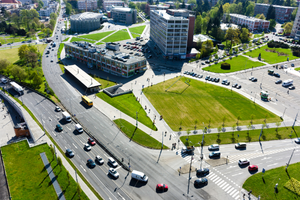
Scale & Infrastructure (Maturity Phase)
For established businesses navigating large expansions, workforce shortages, or global market reach.
Tax Incentives: Access to the state’s Manufacturing and Agriculture Credit and Business Development Tax Credits through coordination with the Wisconsin Economic Development Corporation (WEDC). Click to learn more about Thrive’s Tax Icentives.
Site Selection & Permitting Assistance: ThriveED provides confidential site relocation services and acts as a liaison with county and municipal leaders to streamline local zoning and building permits. Click to learn more about ThriveED.
Workforce Development Boards: The South Central Wisconsin Workforce Development Board and the Job Center of Wisconsin offer candidate matching and candidate search capabilities. Click for Legendary Lake Mills Resources.
Wisconsin Fast Forward (WFF): A state grant program that reimburses Jefferson County employers for the cost of creating customized occupational training for new or existing workers. Click to learn more about Thrive’s WFF.
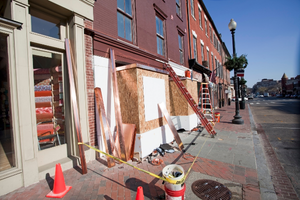

Revitalization or Exit (Transition Phase)
When upgrading physical infrastructure or transferring ownership.
ThriveED Placemaking Initiatives: Assistance with brownfield remediation or connecting with developers via the Live Local Development Fund if you are transitioning commercial real estate assets. Click to learn more about ThriveED.
Downtown Façade Grants: Local chambers (such as Legendary Lake Mills) offer 50-50 matching grants (typically up to $5,000) to renovate the street-facing presence of legacy commercial buildings. Click to learn about Legendary Lake Mills Grants.
Your Local Community Development Educator

Steven Chmielewski
Program Area:
Community Development Educator (Jefferson & Waukesha)
Phone:
262-548-7781
Email:
steven.chmielewski@wisc.edu